
Nos orateurs pléniers pour la réunion de l'AM 2026 comprennent deux conférenciers invités et les trois lauréats des prix 2026 de l'AM pour les jeunes professionnels. Ces orateurs mettent en avant des approches modernes et avant-gardistes de la science ornithologique et de la conservation des oiseaux, et présentent également la diversité des personnes qui effectuent ce travail important, ainsi que les oiseaux qu'elles étudient.
Cliquez sur le lien pour accéder au contenu ci-dessous :
Plénières invitées
Lyra Brennan, M.S.
Directeur du programme des oiseaux d'eau côtiers de Mass Audubon
“Engagement durable et succès sans précédent : la conservation des oiseaux nichant sur les plages du Massachusetts“
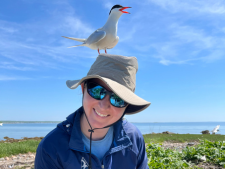
Depuis quatre décennies, le programme de Mass Audubon pour les oiseaux d'eau côtiers (CWP) surveille et protège les Pluviers siffleurs (Charadrius melodus), les sternes naines (Sterna antillarum), et les huîtriers d'Amérique (Haematopus palliatus), en obtenant des succès significatifs dans la restauration de ces populations menacées. Les principaux objectifs du CWP sont les suivants : 1) protéger et surveiller les populations d'oiseaux côtiers et leurs habitats, 2) renforcer les capacités de conservation des communautés locales par la formation et la sensibilisation, 3) plaider en faveur de la protection des écosystèmes côtiers en travaillant en coopération avec les agences fédérales et d'État et les propriétaires fonciers publics et privés, et 4) mener des recherches sur la gestion afin de développer et de diffuser les meilleures pratiques. Le CWP a contribué à l'augmentation significative des populations cibles, mais les données du programme illustrent également la vulnérabilité persistante des oiseaux nichant sur les plages face au changement climatique, aux perturbations humaines et à la perte d'habitat.
Lyra Brennan dirige depuis douze ans les efforts de conservation, de gestion et de recherche sur les oiseaux d'eau dans le Massachusetts. Son mandat au sein du CWP lui a permis de cultiver un lien profond avec les efforts de protection sur le terrain, les écosystèmes côtiers à l'échelle de l'État et les partenaires de conservation le long de la voie de migration atlantique. Lyra a dirigé les projets de restauration d'habitats les plus importants du programme au cours des huit dernières années et reste un fervent défenseur des meilleures pratiques de gestion dans les environnements côtiers. Lyra a accepté le prestigieux prix de conservation Thomas Keesee Jr. de National Audubon au nom du CWP en octobre 2023 ; le prix reconnaît les réalisations du programme dans les domaines suivants C. melodus conservation. Lyra est membre du groupe de travail sur le rétablissement de la Sterne de Dougall (FWS) et du groupe de travail sur l'huîtrier américain (National Audubon). S. antillarum dans Bird Observer. Elle est titulaire d'une maîtrise en ressources naturelles du programme de naturaliste de terrain et de planification écologique de l'université du Vermont (UVM), axée sur les espèces rares dans les habitats humides, et d'un diplôme de premier cycle de l'université de New York. Lyra a également reçu le prix UVM Outstanding Graduate Teaching Assistant Award dans les domaines des ressources naturelles, de la nature et de la culture, et de l'étude de l'environnement. Ses compétences, son expérience et sa foi inébranlable dans la conservation communautaire sont essentielles pour assurer la réussite de la conservation des oiseaux nichant sur les plages.
Fait amusant : Lyra pratique la musculation en compétition !
Patty Rodriguez Brennan, Ph.D.
Professeur associé de sciences biologiques, Mount Holyoke College
“Leçons scientifiques tirées de la vie sexuelle des oiseaux“
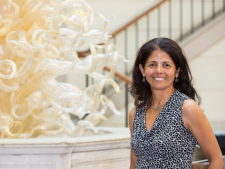
Les tinamous sont des oiseaux discrets et timides, et l'étude de leur système d'accouplement a été difficile pour la doctorante Brennan. À sa grande surprise, elle a découvert que le mâle n'engendrait pas beaucoup d'oisillons dans son nid, ce qui contredisait le paradigme de Bateman-Trivers sur les soins parentaux des mâles. Forte de cette leçon sur la façon de concilier des résultats inattendus avec la littérature, elle a poursuivi son étude des organes génitaux des oiseaux d'eau en tant que post-doctorante, lorsqu'elle a posé une question qui n'avait pas été posée : Si le pénis est si grand et si bizarre, à quoi ressemble le vagin ? Elle a découvert que les oiseaux aquatiques ont des vagins alambiqués qui coévoluent avec le pénis dans une course à l'antagonisme sexuel pour les copulations forcées. Elle a continué à chercher des domaines inexplorés dans les études génitales et a découvert que le pénis des oiseaux aquatiques présentait des signes de plasticité phénotypique. Plus récemment, elle a étendu ses recherches à d'autres vertébrés. Elle étudie actuellement le clitoris aviaire et tente toujours de comprendre pourquoi la biologie féminine continue d'être si négligée dans la recherche.
Patty Brennan, titulaire d'un doctorat, a étudié la biologie marine dans son pays d'origine, la Colombie, et est venue aux États-Unis pour passer un doctorat en neurobiologie et comportement à l'université de Cornell, où elle a commencé à étudier les systèmes d'accouplement des tinamous et s'est rendu compte que certains oiseaux avaient un pénis. Elle a reçu une proposition post-doctorale de la NSF pour étudier les organes génitaux des oiseaux et a travaillé à l'université de Yale et à l'université de Sheffield. Pendant cette période, elle a découvert que certains oiseaux aquatiques femelles ont des vagins convolutés qui coévoluent avec le pénis en raison de conflits sexuels, et elle a passé les années suivantes à étudier la morphologie des organes génitaux, la plasticité phénotypique des organes génitaux et la sélection sexuelle post-copulatoire. Elle a travaillé comme professeur de recherche à l'UMass Amherst, menant des recherches sur les organes génitaux des oiseaux et des chauves-souris, puis a rejoint le Mount Holyoke College, un établissement d'enseignement supérieur ouvert à tous les genres, où elle étudie depuis 2015 l'évolution et la coévolution des organes génitaux chez de nombreux vertébrés, notamment les requins, les serpents, les dauphins, les alpagas et, bien sûr, les oiseaux. Ses recherches actuelles mettent l'accent sur l'étude du vagin et du clitoris, qui ont été négligés par la science. Ses travaux ont été publiés à plusieurs reprises dans la presse écrite et en ligne. Elle a reçu de nombreuses subventions pour mener à bien ses travaux, a publié des dizaines d'articles et a mis en place un vaste programme de sensibilisation. Le Dr Brennan est fière d'être membre de l'AOS, de l'ABS et de l'AAAS.
Fait amusant : Patty vit dans une magnifique ferme biologique diversifiée !
Suivre les recherches du Dr Brennan.
Plénières des lauréats des prix de l'AM 2026 pour les jeunes professionnels
Lauréats du prix James G. Cooper pour les jeunes professionnels
Devon DeRaad, Ph.D.
La Kretz Center for Conservation Science Postdoctoral Fellow, Université de Californie, Los Angeles
“Comprendre les forces évolutives qui régissent l'accumulation de la biodiversité à l'échelle mondiale”
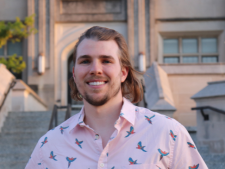
Des décennies de théorie ont permis de comprendre de manière élégante comment la spéciation crée une nouvelle biodiversité. Pourtant, nous ne comprenons toujours pas l'interaction complexe entre les mécanismes évolutifs qui se produisent tout au long du processus de spéciation dans des conditions naturelles. Mon programme de recherche comble ce fossé entre la théorie et la nature, afin d'améliorer notre compréhension de la manière dont la biodiversité est générée et maintenue à travers le monde.
Devon DeRaad, docteur en sciences, est chercheur postdoctoral au La Kretz Center for Conservation Science, sous la direction de Stepfanie Aguillon, docteur en sciences, à l'université de Californie à Los Angeles. En tant que chercheur, DeRaad combine la génomique avec des spécimens et des études sur le terrain afin d'améliorer notre compréhension collective de la manière dont la nouvelle biodiversité est générée. DeRaad a publié une myriade d'articles scientifiques sur le processus de spéciation dans les systèmes aviaires du monde entier, des îles Salomon aux grandes plaines d'Amérique du Nord, et s'enorgueillit d'une science collaborative, rigoureuse et reproductible. Il a obtenu sa licence à l'Occidental College en 2017, où il attribue à l'expérience de recherche de premier cycle au Moore Laboratory of Zoology la possibilité de tomber amoureux de l'ornithologie de musée et du processus de recherche scientifique. Il a ensuite obtenu son doctorat en 2024, sous la direction de Rob Moyle, tout en travaillant au musée d'histoire naturelle de l'université du Kansas. En tant qu'étudiant diplômé, DeRaad a reçu une bourse Madison et Lila Self Graduate Fellowship de l'Université du Kansas, qui a financé la majeure partie de ses études supérieures. DeRaad a déjà reçu une bourse de recherche étudiante de l'AM en 2021 et des subventions de voyage de l'AM en 2017, 2023 et 2025 pour l'aider à assister aux réunions précédentes de l'AM.
Suivez les recherches du Dr DeRaad.
Fengyi Guo, Ph.D.
Rose Postdoctoral Fellow, Cornell Atkinson Postdoctoral Fellow in Sustainability, Cornell University
"Écologie des haltes et conservation des oiseaux terrestres migrateurs en Amérique du Nord"
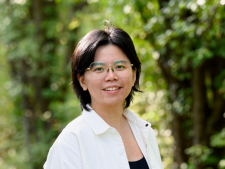
Les oiseaux terrestres migrateurs connaissent un déclin spectaculaire de leurs populations en Amérique du Nord, mais on sait peu de choses sur les habitats importants qu'ils utilisent comme sites d'escale pendant la migration. Mes recherches s'appuient sur le système NEXRAD (Next Generation Weather Radar) pour surveiller les schémas de déplacement à l'échelle continentale et la répartition des haltes migratoires des oiseaux terrestres migrateurs dans l'ensemble des États-Unis contigus. Dans cet exposé, je présenterai mes travaux sur l'identification des points chauds d'escale et des habitats clés pour les oiseaux terrestres migrateurs, et j'évaluerai comment ils font face aux barrières migratoires avec des sites d'escale limités. Je parlerai également des projets en cours qui consistent à cartographier les tendances démographiques à long terme des oiseaux terrestres migrateurs pendant les escales et à évaluer les impacts des changements d'utilisation des sols. Enfin, je soulignerai la collaboration en cours avec l'USDA-NRCS sur un nouveau cadre de conservation qui traduit ces connaissances sur l'écologie des haltes migratoires en une conservation des oiseaux terrestres migrateurs fondée sur des données probantes.
Fengyi Guo (Freda) est titulaire d'une bourse postdoctorale Rose au Cornell Lab of Ornithology et d'une bourse postdoctorale Cornell Atkinson sur le développement durable. Elle est une biologiste de la conservation engagée dans une recherche orientée vers les solutions. Combinant la télédétection radar à forte intensité de données et les enquêtes sur le terrain, ses recherches se concentrent sur l'identification des points chauds d'escale et des habitats clés pour les oiseaux terrestres migrateurs pendant la période en route, contribuant ainsi à la conservation de l'ensemble du cycle annuel des oiseaux migrateurs. Ses travaux actuels portent sur les tendances démographiques à long terme des oiseaux terrestres migrateurs en escale dans la zone contiguë des États-Unis, sur la quantification des impacts des changements passés dans l'utilisation des terres et sur l'évaluation de l'efficacité des mesures de conservation. Guo collabore avec l'USDA-Natural Resources Conservation Service afin de développer des recommandations de conservation pour la protection et la restauration d'importants habitats d'escale pour les oiseaux terrestres migrateurs dans l'est des États-Unis. Elle a obtenu son doctorat à l'université de Princeton en 2024, ainsi qu'une maîtrise en 2018 et une licence en 2016, toutes deux à l'université de Hong Kong. Son travail a été couvert par la National Public Radio (NPR) et par l'Université de Hong Kong. Audubon et a également reçu un prix de début de carrière de l'International Radar Aeroecology Conference.
Fait amusant : Freda adore les chats et les oiseaux.
Suivez les recherches du Dr. Guo.
Lauréat du prix Ned K. Johnson Early Investigator Award
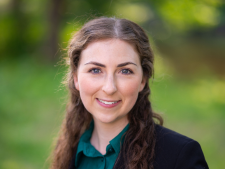
Olivia M. Smith, Ph.D.
Professeur adjoint, Université de l'État du Michigan
“L'agriculture avec le troupeau : Repenser les systèmes agricoles pour l'homme et la nature“
L'agriculture est le principal mode d'utilisation des terres sur Terre et l'un des principaux facteurs du déclin des populations d'oiseaux, ce qui fait des terres exploitées un élément central des efforts de conservation. Bien que les oiseaux soient souvent considérés comme des ravageurs agricoles, ils peuvent également fournir de précieux services écosystémiques, notamment en contrôlant les insectes et les vertébrés nuisibles aux cultures. Dans cette présentation, je m'appuie sur des expériences de terrain et des études d'observation à grande échelle pour montrer comment les coûts et les avantages liés à la présence d'oiseaux dans les exploitations agricoles dépendent de la gestion et du contexte paysager. Je mettrai en avant des recherches démontrant comment des pratiques telles que la diversification agricole et l'installation de nichoirs pour rapaces peuvent modifier ces compromis coûts-bénéfices, en améliorant les services écosystémiques tout en réduisant les risques. Ces résultats illustrent comment les systèmes agricoles peuvent être repensés pour concilier conservation et production, en proposant des stratégies pratiques et abordables pour soutenir à la fois les agriculteurs et les populations d'oiseaux.
Olivia M. Smith, docteur en sciences, est professeur adjoint à l'université de l'État du Michigan, où elle dirige le Smith BIRDS Lab. Ses recherches portent sur la façon dont les paysages peuvent être gérés pour soutenir à la fois l'homme et la nature. Dans une perspective de services écosystémiques, ses travaux examinent comment les oiseaux contribuent aux services écosystémiques tels que la lutte contre les parasites, tout en s'attaquant aux services négatifs potentiels, en particulier les risques liés à la sécurité alimentaire. À l'aide d'études d'observation à grande échelle, d'expériences sur le terrain et d'approches interdisciplinaires, elle élabore des stratégies de conservation pratiques et incitatives pour les terres cultivées. Mme Smith a obtenu une licence à l'université Siena Heights en 2013, où elle était également titulaire d'une bourse McNair. Elle a ensuite obtenu une maîtrise à l'Ohio State University en 2015 et un doctorat en biologie à la Washington State University en 2019. Mme Smith a reçu des bourses compétitives, notamment une bourse pré-doctorale de l'USDA, une bourse postdoctorale de l'USDA et une bourse postdoctorale présidentielle de l'Université de l'État du Michigan en écologie, évolution et comportement. Elle a publié 40 articles évalués par des pairs dans des revues scientifiques, y compris des manuscrits en tant que premier auteur dans PNAS, Nature Écologie et évolution, Tendances en écologie et évolution, Journal de l'écologie appliquée, et bien d'autres choses encore. Elle est co-auteur d'articles dans des revues de premier plan telles que La science, Biologie du changement globalet Une seule Terre. Elle a également été rédactrice en chef adjointe de la revue de l'AM Applications ornithologiques de 2021 à 2024. Ses recherches ont déjà été récompensées par des prix tels que le Frontiers Planet Prize, et elle a reçu des bourses de voyage de l'AM en 2017, 2018 et 2020.



 French
  English
  Spanish